
When an HVAC system needs a significant repair, the homeowner has two questions: what will it take to fix the problem, and what would replacing the system change?
Answering those questions in separate documents makes the comparison harder. A repair price on one screen and replacement packages on another leave the homeowner to connect the scope, coverage, and cost themselves.
A combined proposal puts both paths in view. In SetSale, you can designate individual tiers as Repair or Replace, then present them together. The goal is to help the homeowner understand a real choice and talk through the tradeoffs with you.
Give the repair a clear scope
Start with the diagnosed problem and the work needed to address it. A label such as “Replace the blower motor” tells the homeowner more than a generic “Basic” tier.
Explain what the repair addresses and what it leaves unchanged. Replacing a failed component does not turn the rest of the existing equipment into a new system. That is useful context for the decision, without predicting another failure or promising a particular remaining life.
Set the tier to Repair and use Services to include the relevant repair work and costs. For the replacement tiers, select the equipment and include the services needed for that installation.
Name each path in language the homeowner uses
Tier names can change for an individual quote. Use that flexibility to describe the actual choice: “Current system repair,” “Standard replacement,” or “Variable-speed comfort,” for example.
The name starts the conversation; the details need to support it. Explain which equipment is included, which comfort needs it addresses, and what coverage comes with the work. Give a specific reason for presenting each replacement option.
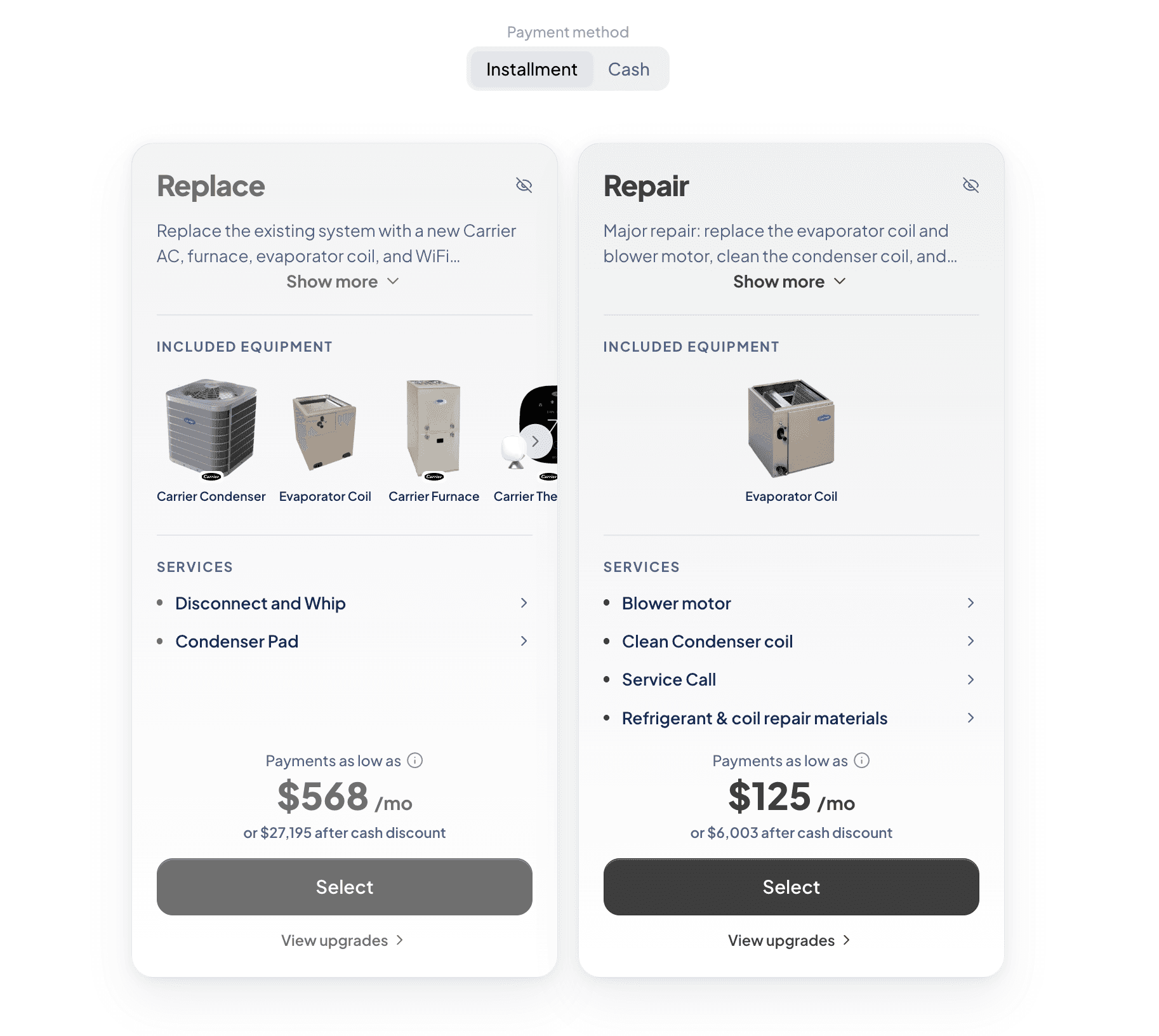
The screenshot at the top compares a complete system replacement with a more substantial repair in the current Checkout Studio. The repair includes a replacement evaporator coil, blower-motor work, condenser-coil cleaning, a service call, refrigerant and repair materials, and eight labor hours. It retains the existing furnace and outdoor unit. Both options show estimated monthly payments and cash totals. This sandbox example illustrates a $6,003 repair against a $27,195 replacement; it is not a diagnosis, a typical market price, or a recommendation for a particular home.
Compare ownership as well as today's bill
A useful comparison covers the immediate investment and the differences the homeowner will live with afterward. Discuss the diagnosed repair, the proposed equipment, comfort concerns, and the warranty or labor protection offered on each path.
If efficiency is part of the replacement conversation, explain the assumptions behind any operating-cost estimate. The equipment rating alone does not establish what a particular household will save.
Payment choices can help a homeowner consider the options, but keep them connected to the full purchase. A monthly payment should make the terms easier to understand, alongside the total investment.
Preview the decision before you send it
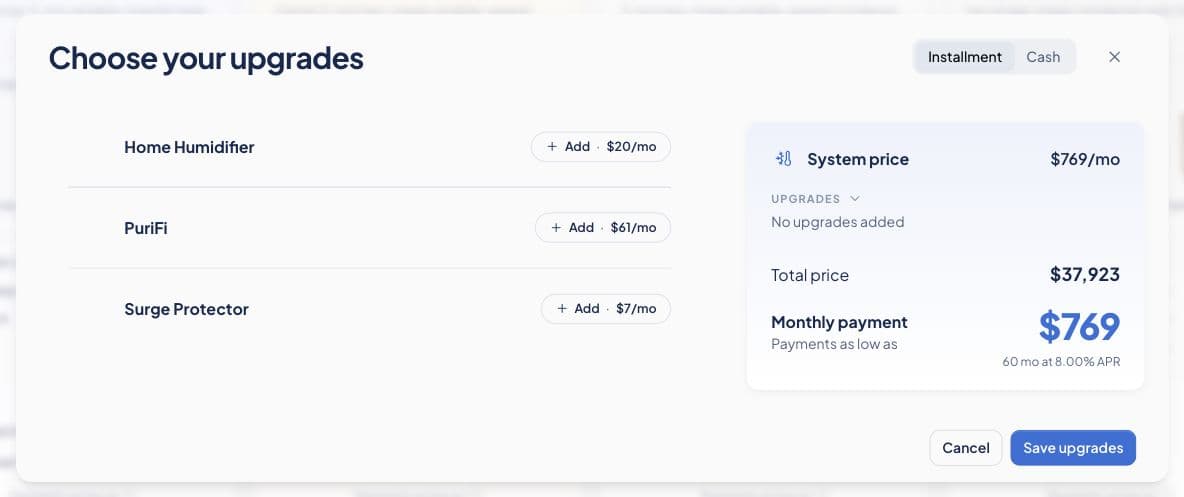
Open the homeowner preview and review the options side by side. Check that a service intended for the repair has not also been included in a replacement tier by mistake. Confirm that descriptions, upgrades, coverage, and totals match the work you intend to offer.
Then use the comparison to ask better questions. Is the homeowner trying to address the immediate failure, solve an ongoing comfort problem, or plan for longer-term ownership? Their answer gives your recommendation context.
For teams that regularly present both paths, a repair-and-replace system template can provide a repeatable starting point. Keep tailoring the scope and explanation to the home in front of you.
The strongest proposal makes both choices understandable. That gives the homeowner a clearer basis for deciding—and gives your team a conversation they can carry consistently from the diagnosis to the final quote.